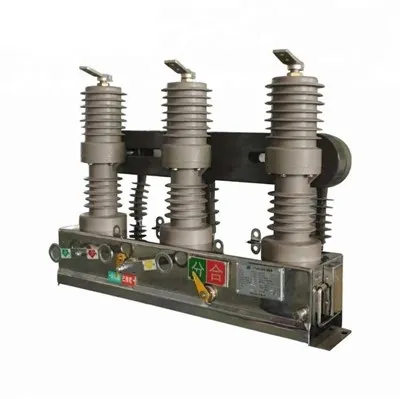
Hey there! As a supplier of Outdoor High Voltage Circuit Breakers, I often get asked about the inspection items during maintenance. So, I thought I'd share some insights on what we typically look for when maintaining these important pieces of equipment.
First off, let's talk about the mechanical inspection. This is a crucial part of the maintenance process because the mechanical components of an Outdoor High Voltage Circuit Breaker Outdoor High Voltage Circuit Breaker need to be in top - notch condition.
One of the key things we check is the operating mechanism. The operating mechanism is responsible for opening and closing the circuit breaker. We look for any signs of wear and tear, such as loose or damaged parts. For example, the springs in the mechanism can lose their elasticity over time. If the springs are not functioning properly, it can lead to issues with the opening and closing times of the circuit breaker, which is a big no - no in high - voltage applications.
We also inspect the linkages. The linkages connect different parts of the operating mechanism, and they need to be properly aligned and lubricated. If the linkages are misaligned, it can cause uneven movement, and if they're not lubricated, there can be excessive friction, which can damage the components.
Another important mechanical inspection item is the contact system. The contacts in an outdoor high - voltage circuit breaker are responsible for carrying the electrical current. We check for any signs of arcing or burning on the contacts. Arcing can occur when the circuit breaker opens or closes, and over time, it can cause damage to the contact surfaces. If the contacts are damaged, it can lead to increased resistance, which can generate heat and potentially cause a failure of the circuit breaker.
Now, let's move on to the electrical inspection. This is where we ensure that the electrical performance of the circuit breaker is up to par.
We start by measuring the insulation resistance. Insulation is critical in high - voltage applications because it prevents electrical leakage. A low insulation resistance can indicate a problem with the insulation material, such as moisture ingress or damage. We use specialized equipment to measure the insulation resistance, and if it's below the recommended level, we need to take further steps to investigate and fix the issue.
The contact resistance is another important electrical parameter. As I mentioned earlier, the contacts carry the electrical current, and any increase in contact resistance can lead to overheating. We measure the contact resistance using a micro - ohmmeter. If the contact resistance is too high, we may need to clean or replace the contacts.
We also check the capacitance and dielectric loss of the circuit breaker. These parameters give us an idea of the condition of the insulation system. An increase in capacitance or dielectric loss can indicate deterioration of the insulation, which can be a sign of impending failure.
The control and protection circuits are also inspected during the electrical check. These circuits are responsible for controlling the operation of the circuit breaker and providing protection in case of faults. We check for any loose connections, damaged wires, or malfunctioning components in these circuits.
Next up is the inspection of the external components. The outdoor environment can be harsh on the circuit breaker, so we need to pay attention to the external parts.
The housing of the circuit breaker needs to be inspected for any signs of damage, such as cracks or corrosion. A damaged housing can allow moisture and dust to enter the circuit breaker, which can cause internal damage. We also check the gaskets and seals around the housing to ensure they are in good condition and providing a proper seal.
The bushings are another important external component. Bushings are used to insulate the electrical conductors as they pass through the housing of the circuit breaker. We check for any signs of cracking, tracking, or other damage on the bushings. If the bushings are damaged, it can lead to electrical breakdown and potentially cause a failure of the circuit breaker.
The anti - icing and anti - pollution coatings on the circuit breaker are also inspected. These coatings help to prevent ice formation and the accumulation of pollutants on the surface of the circuit breaker. If the coatings are worn or damaged, we may need to re - apply them to ensure the proper operation of the circuit breaker.


Let's not forget about the gas - filled circuit breakers. If your circuit breaker uses a gas, such as SF6, we need to check the gas pressure. The gas pressure is critical for the proper operation of the circuit breaker. A low gas pressure can indicate a leak, which needs to be addressed immediately. We also check the quality of the gas, as contaminants in the gas can affect the performance of the circuit breaker.
Now, if you're looking for a high - quality Outdoor High Voltage Circuit Breaker, we also offer the Intelligent Integrated Vacuum Circuit Breaker and Electronic Circuit Breaker. These products come with advanced features and reliable performance.
If you're in the market for an outdoor high - voltage circuit breaker or have any questions about maintenance, don't hesitate to reach out. We're here to help you make the right choice for your electrical system. Whether you're a utility company, an industrial facility, or any other organization that needs high - voltage protection, we can provide you with the products and support you need.
In conclusion, regular maintenance and inspection of outdoor high - voltage circuit breakers are essential for ensuring their reliable operation. By paying attention to the mechanical, electrical, and external components, we can catch potential problems early and prevent costly failures. So, if you're in the market for a new circuit breaker or need help with maintenance, give us a shout. We're ready to assist you in finding the best solution for your needs.
References:
- Electrical Equipment Maintenance Handbook
- High - Voltage Circuit Breaker Standards and Guidelines